What Size Heat Press Do I Need? 9×9 vs 12×10 vs 15×15 vs 16×20
Match the platen to the designs and placements you actually sell—when a smaller plate is enough, why 15×15 is the usual starting point, and when 16×20 earns its extra space.
Choose a heat press around the largest design you expect to sell repeatedly, not the size printed on the shirt tag. For most apparel-first home businesses, a 15×15-inch platen is the practical middle ground: it handles many common adult designs without taking on the footprint and cost of a larger machine.
A 9×9 or 12×10 can still be a rational choice for compact graphics and occasional work. A 16×20 makes more sense when oversized artwork is already a recurring paid product—not simply something you might offer someday.
Quick answer
| Platen class | Best fit | Main limitation |
|---|---|---|
| 9×9 | Small graphics, baby items, compact projects, occasional adult work | Larger adult artwork quickly exceeds one-cycle coverage |
| 12×10 | Youth apparel, medium graphics, totes, larger handheld work | Wide or tall adult fronts can still feel constrained |
| 15×15 | Most apparel-first home sellers | Designs near 14 inches leave little alignment tolerance |
| 16×20 | Recurring oversized fronts, backs, and fashion graphics | More machine, weight, and workspace than many beginners need |
Already committed to 15×15? Continue with the 15×15 heat press buyer’s guide.
Platen size and press form are separate decisions
Platen size describes the heated surface. Form factor describes how the machine loads and applies pressure: handheld, clamshell, swing-away, or automatic drawer.
- Approximately 9×9 and 12×10 sizes appear on handheld presses and some compact clamping machines.
- 15×15 and 16×20 sizes appear across clamshell, swing-away, drawer, and automatic designs.
A larger platen does not guarantee more even pressure. Pressure mechanism, platen alignment, construction, settings, and operator technique all matter. After choosing the size, use EasyPress vs full heat press and auto vs manual heat press to choose the form.
9×9 vs 12×10 vs 15×15 vs 16×20
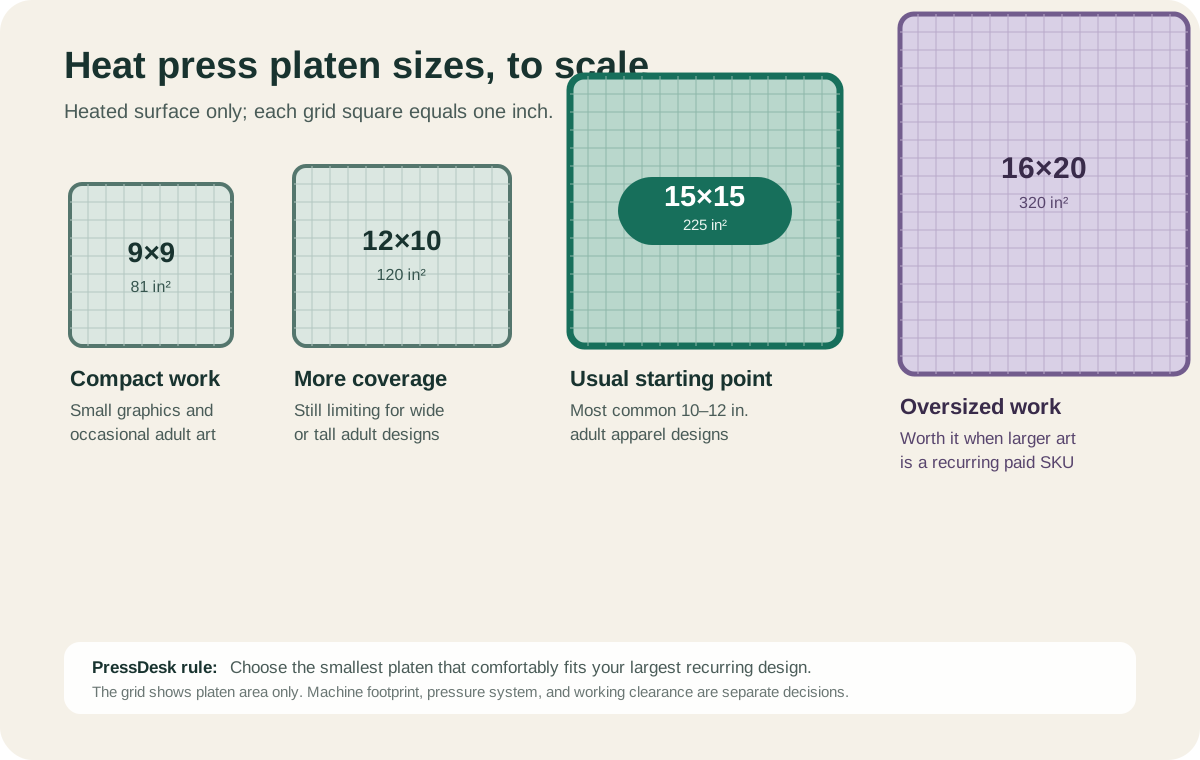
9×9: compact and capable, but easy to outgrow
A 9×9 plate can handle left-chest logos, baby garments, smaller tote graphics, and many intentionally compact shirt designs. It becomes restrictive when a catalog moves toward wider adult fronts or tall back artwork. Sectional pressing may be possible for some materials, but it adds steps that are hard to justify as the standard process for paid apparel.
12×10: useful middle step
A 12×10 gives noticeably more coverage than 9×9 and can suit a seller whose catalog centers on youth garments, modest adult graphics, and smaller blanks. Orientation matters: a 12-inch-wide design may fit along the long edge while its height still exceeds the 10-inch edge. Judge both dimensions, not just the largest number in the listing.
15×15: the usual starting point for apparel-first sellers
Multiple trade sources—including SignWarehouse, Joto Imaging Supplies, and DTF Dallas—recommend 15×15 as a practical starting size for common adult apparel and small-business transfer work.
It comfortably accommodates many adult designs around 10–12 inches. Artwork approaching 14 inches may fit physically, but alignment tolerance becomes tighter depending on the other dimension, garment construction, seams, and placement.
16×20: for oversized work that already sells
The longer platen provides more room for tall full fronts, large backs, and oversized fashion graphics in one cycle. It is not automatically more professional. Platen size alone does not indicate build quality, durability, or temperature and pressure performance. The added capacity is wasted if your catalog rarely uses it.
What about 11×15 and 14×16?
Intermediate sizes can be good candidates. Evaluate both edges against your recurring artwork, then compare the machine’s form, clearance, support, and price with nearby 15×15 options. Do not assume an unusual size is either a bargain or a compromise solely because it falls between the common classes.
Physical platen size vs comfortable working dimensions
A 15×15 platen is physically 15 inches by 15 inches. But a design that nearly fills those dimensions leaves little room for alignment, collars, seams, or garment loading.
- Physical platen size
- The manufacturer’s heated-surface dimensions.
- Comfortable working dimensions
- The design space left after allowing for positioning, garment construction, and the intended visual placement.
Joto’s buying guidance describes roughly 12–13 inches in width and height as a practical frame on a 15×15 after positioning margins. Treat that as working-clearance guidance—not a claim that three inches of the platen are unusable.
Project and design-fit matrix
Transfer suppliers publish useful sizing suggestions, but these are not universal apparel standards. The ranges below combine guidance from Limitless Transfers and Eagle DTF Print. Garment cut, artwork proportions, and the intended look can change the answer.
| Project | 9×9 | 12×10 | 15×15 | 16×20 |
|---|---|---|---|---|
| Left chest Often 3–4 in. wide |
Comfortable | Comfortable | Spacious | More area than needed |
| Adult full front Commonly 10–12 in. wide |
Tight for larger art | Depends on both dimensions | Comfortable for many designs | Spacious; useful for oversized looks |
| Adult back Often 11–14 in. wide |
Usually undersized | Often tight | Comfortable at the lower end; tight near 14 in. | More positioning room |
| Youth tee Varies widely by age |
Good for smaller youth art | Comfortable for many designs | Spacious | Usually unnecessary |
| Baby or onesie Often 5–7 in. |
Comfortable | Comfortable | Spacious | Usually unnecessary |
| Tote panel Often 10–12 in. square |
Tight | Borderline for square art | Comfortable for many panels | Spacious |
| Hoodie chest | Best for compact art | Often constrained | Works for many standard placements | Best for recurring oversized looks |
Fit descriptions are planning guidance, not guarantees. Test the exact artwork and blank before listing a design at volume.
Can you press a design in sections?
Sometimes. Prefer one comfortable cycle for recurring customer-facing full fronts, but keep HTV and DTF guidance separate.
HTV
Some HTV workflows intentionally use multiple applications for layering, tacking, or a final press. Siser’s Two Second Tack Method, for example, documents shifting a design with overlap when it is larger than the plate. That instruction applies to the specified Siser workflow; it should not be generalized to every film.
Sectioning adds alignment work and can expose portions of the design to different heat durations. Follow the material manufacturer’s instructions and test before production.
DTF
For DTF, follow the transfer supplier’s temperature, pressure, peel, and sectional-pressing instructions. DTF Dallas warns that undersized presses can create visible lines or inconsistent adhesion where press zones overlap. That is a risk—not a guaranteed failure—but it is a poor default process when large DTF graphics are a recurring paid SKU.
DTF gang-sheet size is not platen size
A 16×20 gang sheet describes how multiple transfers are printed and shipped. It does not automatically mean you need a 16×20 heat press. Individual designs can often be cut from the sheet and pressed separately.
Match the platen to the largest design you press as one piece—not the largest sheet your supplier can print. If you are still deciding between purchased DTF and cut HTV, see DTF vs HTV for cotton Etsy tees.
Check the whole machine, table, and circuit
Platen dimensions are not machine dimensions. A housing, handle, drawer, or swing arm can add substantial depth and clearance. Likewise, wattage varies by model rather than size label alone.
- Measure the machine in its open or extended position, not only while closed.
- Confirm the table can support the listed machine weight without wobbling.
- Check the exact wattage and electrical requirements against the intended circuit.
- Leave safe loading clearance around hot surfaces and moving parts.
Compare common home-machine layouts in Auto vs Manual Heat Press.
Heat press size decision tree
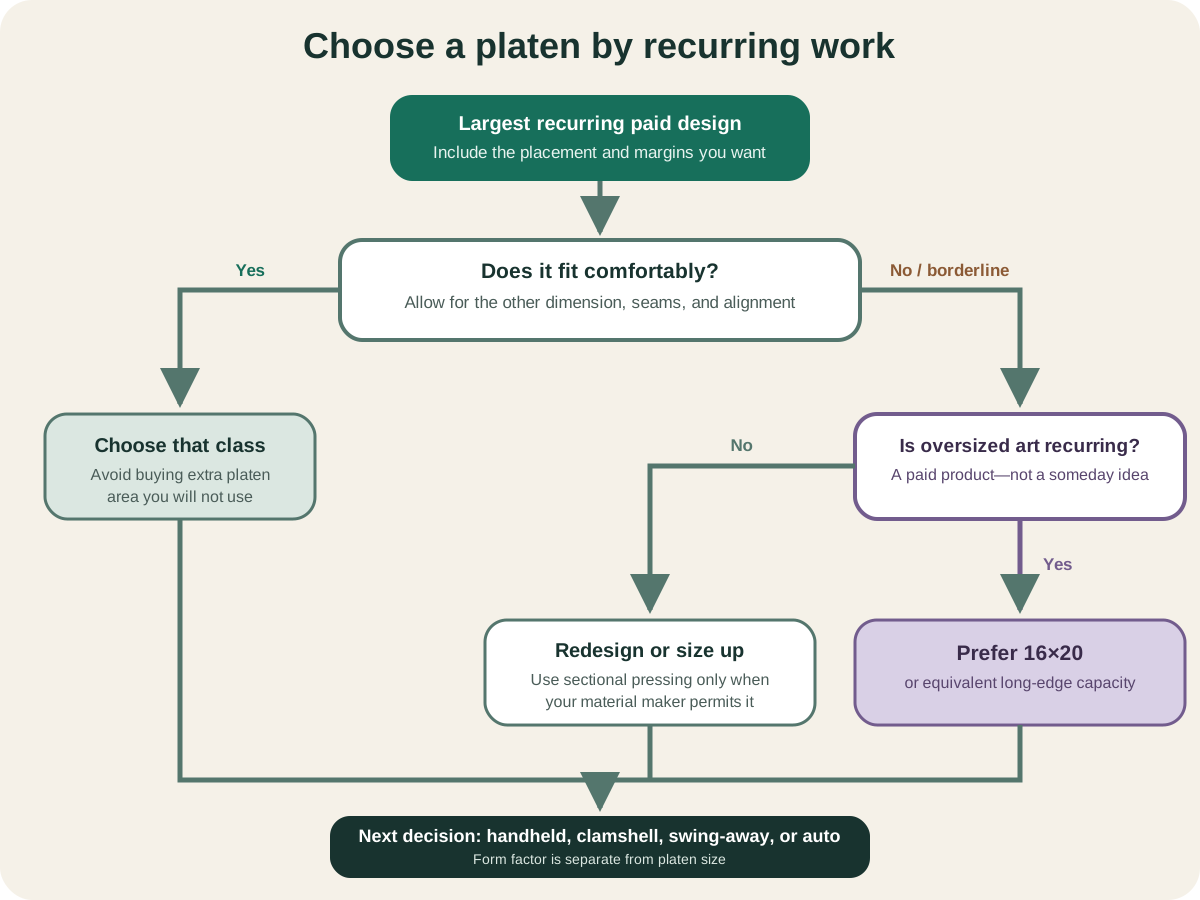
Does your largest recurring paid design fit with comfortable alignment margins?
-
Yes
Choose that size class. Extra platen area is not automatically better.
-
No—and oversized artwork is a core product
Prefer 16×20 or another machine with enough long-edge capacity.
-
No—but the large job is occasional
Redesign, outsource, or size up. Use sectional pressing only when the material maker permits it.
Common sizing mistakes
- Buying by shirt size instead of measuring the actual artwork and placement.
- Looking at only one artwork dimension—a 12-inch width tells you nothing about whether the height fits a 10-inch plate.
- Confusing platen size with press form or assuming more inches fix uneven pressure.
- Planning sectional pressing as the default for recurring adult full fronts.
- Buying 16×20 for a hypothetical catalog while overlooking table space, weight, or the rest of the setup.
- Measuring the platen but not the machine, open handle, drawer travel, or swing clearance.
FAQ
Is 15×15 enough for hoodies?
Often yes for standard chest placements above the pocket. Hoodie thickness, seams, pocket clearance, and machine form can matter as much as platen size. Recurring oversized hoodie art may justify 16×20.
Do I need 16×20 for DTF?
No. A 15×15 handles many common adult DTF designs. Choose 16×20 when large single-piece transfers are a recurring product, and always follow the transfer supplier’s pressing instructions.
Can I press a 14-inch design on a 15×15?
It may fit physically, but it leaves little tolerance on that axis. Check the other dimension, seams, garment construction, and placement, then test the exact blank before offering the design at volume.
Is 12×10 only an EasyPress size?
No. It and nearby sizes also appear on some compact clamping presses. Size and pressure mechanism are separate specifications.
Does multi-placement always fail?
No. Some HTV instructions document sectional pressing. Whether it is appropriate depends on the exact material and manufacturer guidance. It adds steps and risk, so it is less attractive as the standard process for recurring paid designs.
How we reached this recommendation
PressDesk compared manufacturer-published platen dimensions, trade buying guidance, transfer-supplier design-size suggestions, and material-application instructions. Multiple trade sources recommend 15×15 as a practical starting point for many adult-apparel workflows, while 16×20 adds room for recurring oversized work.
Design-size ranges are planning references—not universal standards. “Comfortable working dimensions” is PressDesk analysis of alignment and garment clearance, not a reduced manufacturer specification. We did not conduct hands-on heat or pressure testing for this guide.
Final recommendation
- 9×9: compact graphics, baby items, and occasional adult work
- 12×10: more coverage for youth and medium designs, with limits on wide or tall adult art
- 15×15: the default starting point for most apparel-first home sellers
- 16×20: recurring oversized fronts, backs, or fashion graphics that should press in one cycle
Choose the smallest platen that comfortably fits your largest recurring paid design. Then make the separate decision between handheld, clamshell, swing-away, and automatic machines.