EasyPress vs Full Heat Press: When Etsy Sellers Should Upgrade
EasyPress vs heat press for selling—when a handheld plate is enough for samples and low volume, when a 15×15 clamshell, swing-away, or auto press is worth it, and how to think about cost per shirt without gear theater.
Many Etsy apparel sellers start with a Cricut EasyPress (or a similar handheld heat plate) because it is smaller, cheaper to try, and already sits next to a cutting machine. The upgrade question shows up later: when does EasyPress stop being enough for selling, and when is a full 15×15 heat press the rational next buy?
This comparison is written for sellers—not craft-only hobbyists. We compare published form factors, manufacturer application guidance, common studio workflows, and approximate 2025–2026 street-price bands. The goal is a clear EasyPress vs heat press for selling decision: keep the handheld for samples, or move paid orders onto a press that can repeat pressure and coverage.
We did not run private adhesion labs or invent “we pressed 300 shirts” rankings. Tradeoffs below follow public specs (platen/plate size, listed temperature controls, mechanical pressure vs hand pressure) and patterns sellers routinely describe when volume climbs. Always verify the live listing and your material charts before you buy.
Quick comparison
| Factor | EasyPress / handheld | Full 15×15 heat press |
|---|---|---|
| Typical form | Portable heated plate with handle (e.g. EasyPress 2 / 3 sizes) | Clamshell, swing-away, or auto/drawer machine with fixed platens |
| Pressure | Mostly hand / body-weight—skill-dependent | Lever / clamp / auto—more repeatable across shirts |
| Coverage | Often ~6×7 to ~12×10 plate sizes (SKU-dependent) | True 15×15 platen covers most adult chest/back placements |
| Footprint | Desk-friendly; stores in a drawer or tote | Dedicated table; swing-aways need extra clearance |
| Best Etsy fit | Samples, gifts, tiny customs, small logos | Paid batches, full-chest art, DTF film, multi-item orders |
| Approx. street price* | Often ~$80–$200 depending on size/generation | Often ~$140–$350+ for beginner 15×15 options |
| Main risk when selling | Uneven pressure → peel/returns on larger designs | Space, weight, learning curve on pressure dials |
*Approximate bands from manufacturer and major-retailer listings commonly observed around 2025–2026. Promo kits and refurbished units move the needle—confirm before checkout.
Affiliate link — Amazon · Affiliate link — brand store
As an Amazon Associate, PressDesk may earn from qualifying purchases.
-
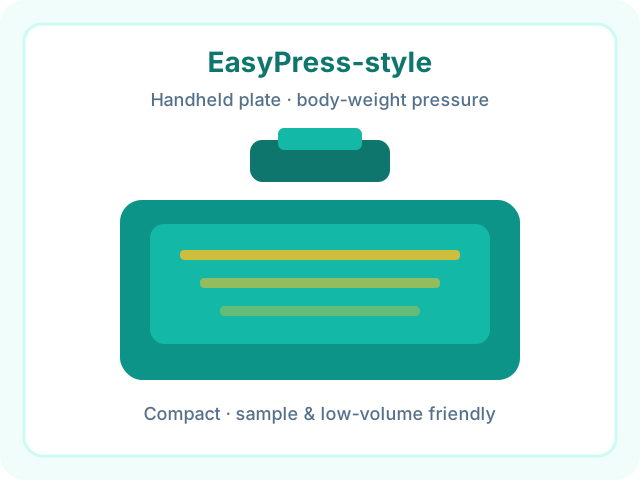
EasyPress-style
-
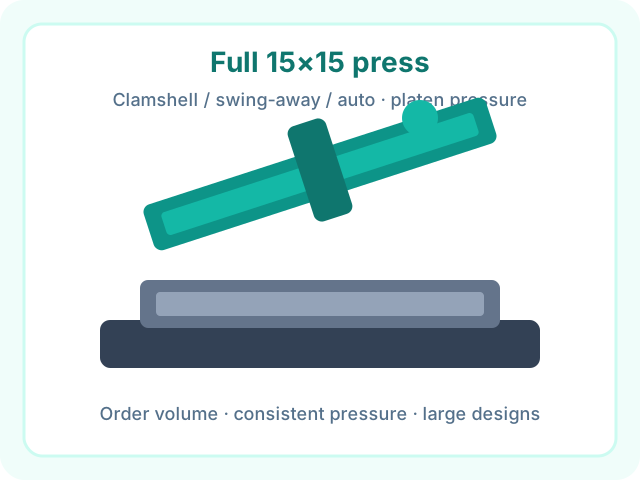
Full 15×15 press
Who this guide is for
You’re in the right place if you:
- Already own—or are tempted by—an EasyPress (or similar handheld) and now have paid Etsy orders
- Need a defensible answer to EasyPress vs heat press for selling, not just “which is more popular on TikTok”
- Want upgrade triggers based on volume, design size, and return risk—not gear FOMO
- Press HTV, purchased DTF transfers, or both on cotton/blend apparel
Look elsewhere (for now) if you:
- Only decorate personal gifts and never ship customer orders
- Already run a commercial pneumatic press floor
- Need mug/hat/specialty attachment deep dives (different accessories lane)
What each tool actually is
EasyPress / handheld heat plate
An EasyPress is a temperature-controlled heated plate you press by hand. Manufacturer materials emphasize digital time/temp controls and firm, even hand pressure across the plate. It behaves like a refined iron replacement for HTV and many transfer applications—not like a shop press with a clamping mechanism.
Strengths: small footprint, lower entry cost for many sizes, portable for craft fairs or shared apartments, fast to pull out for a one-off sample.
Limits for sellers: pressure consistency depends on you; larger designs may need overlapping presses; multi-shirt batches fatigue wrists and introduce shirt-to-shirt variation.
Full heat press (clamshell / swing-away / auto)
A full heat press uses matched upper and lower platens and applies pressure through a lever, swing arm, or automatic cycle. Beginner Etsy shops usually land on a 15×15-inch platen—the same sweet spot covered in our 15×15 heat press buyer’s guide.
Strengths: more even pressure across a full chest print, clearer “same settings every time” workflow, better fit for DTF film and thicker garments when you choose the right design class.
Limits: weight, dedicated table space, and a steeper first-week learning curve on pressure adjustments (especially manual clamshells).
EasyPress wins on
- Portability and storage
- Low-volume samples and tiny logos
- Lower commitment while validating designs
Full press wins on
- Batch consistency for paid orders
- Full-chest coverage without puzzle-pressing
- Repeatable pressure for HTV and DTF charts
Pressure, heat, and size (the seller-critical trio)
Customer returns rarely say “you used the wrong brand of press.” They say the print peeled, cracked early, or looked different from the listing photo. Those failures usually trace to time/temp/pressure mismatch—and handheld tools make pressure the hardest variable to hold steady.
Heat
Both tool classes advertise adjustable temperature suitable for common HTV and many transfer charts. That is necessary but not sufficient. Spot-checking with an infrared thermometer (where safe and practical) is a known seller habit when results drift mid-batch—regardless of tool.
Pressure
Material charts call for light, medium, or firm pressure. On an EasyPress, “firm” means your arms and stance. On a full press, it means a mechanical setting you can return to. For one shirt, skilled hand pressure can look fine. For ten identical SKUs in one order, mechanical pressure is usually easier to defend.
Size / coverage
A 9×9 or 12×10 plate can handle many pocket logos and small chest marks. Adult full-chest graphics, large DTF transfers, and hoodie fronts often exceed a comfortable single placement on a handheld plate. Overlapping presses increase the chance of shiny seams, missed edges, or uneven adhesion—exactly the defects that show up in review photos.
When EasyPress is enough
Keep (or buy) an EasyPress-class tool when your shop looks like this:
- Samples and listing photos first — you are still validating which designs sell before committing table space to a full press
- Very low weekly volume — roughly a handful of shirts (or fewer) when you include customs and restocks
- Small placements — names, pocket logos, left-chest marks that fit cleanly on your plate
- Space is the hard constraint — dorm, shared apartment, or a desk that cannot hold a 15×15 machine safely
- Event / pop-up mobility — you need something that travels without a furniture plan
In those lanes, an EasyPress can be a rational selling tool—not only a craft toy—as long as you are honest in listings about finish expectations and you wash-test your stack.
When a 15×15 clamshell, swing-away, or auto is worth it
A full heat press starts paying for itself when consistency becomes cheaper than redoing blanks and apologizing to buyers.
Upgrade toward a 15×15 when several of these are true:
- You regularly ship multi-shirt orders that must match each other
- Designs are full-chest or larger than your handheld plate
- You are pressing purchased DTF transfers and need even film adhesion
- You feel hand/wrist fatigue or notice pressure fading across a batch
- Returns or remakes cite peel/lift after you already followed time/temp charts
- Weekly volume is climbing past “hobby evenings” into a real production block
Which full-press style? Use the design-class logic from the 15×15 guide:
- Clamshell — tight space, budget-first, mostly flat tees
- Swing-away — safer open-platen loading, hoodies, clearer alignment (needs clearance)
- Auto / drawer — less pressure guesswork while you validate product-market fit
You do not need to jump to pneumatic commercial gear. For most Etsy apparel niches in 2026, a well-chosen beginner 15×15 is the upgrade that matters.
Cost per shirt thinking (not just sticker price)
Compare tools the way a shop owner should: equipment amortized + remake rate + labor time.
| Cost lens | EasyPress path | 15×15 press path |
|---|---|---|
| Upfront gear | Often lower for a mid-size handheld | Often higher, but still usually under a few hundred dollars for beginner units |
| Labor per shirt | Can rise on large designs (overlap presses, more attention) | Usually lower once settings are dialed for a SKU |
| Remake risk | Higher when pressure varies shirt to shirt | Lower when mechanical pressure is repeatable |
| Space cost | Nearly free (desk corner) | Real: dedicated table + clearance |
A rough framing many sellers use: if remakes and extra labor from uneven handheld pressure cost more than the monthly “payment” on a ~$150–$300 press over a season, the upgrade is not luxury—it is quality control. Your numbers will differ; run the math on your blank cost and remake rate rather than copying a viral spreadsheet.
Also price your time. Standing over a plate for twenty overlapping presses is “free” until you count evenings you cannot list new designs.
DTF vs HTV: high-level differences for this gear choice
Method choice and press choice interact. For a deeper method comparison, see DTF vs HTV for cotton Etsy tees. Here is the gear-relevant short version:
- Simple HTV (one color, small logo): EasyPress can remain viable longer—especially while volume is low and placements are small.
- Layered HTV or large weedy designs: time cost is already high; inconsistent pressure makes expensive weeding wasted work. A full press protects that labor.
- Purchased DTF transfers: you paid for even film coverage. A full 15×15 platen usually matches the transfer better than puzzle-pressing with a smaller plate.
- Hybrid shops: many sellers keep an EasyPress for tiny samples and move paid DTF/HTV orders onto the 15×15.
If HTV cutting is part of your path, cutter choice still matters separately—see Cricut Explore vs Maker for sticker & vinyl shops.
Decision tree
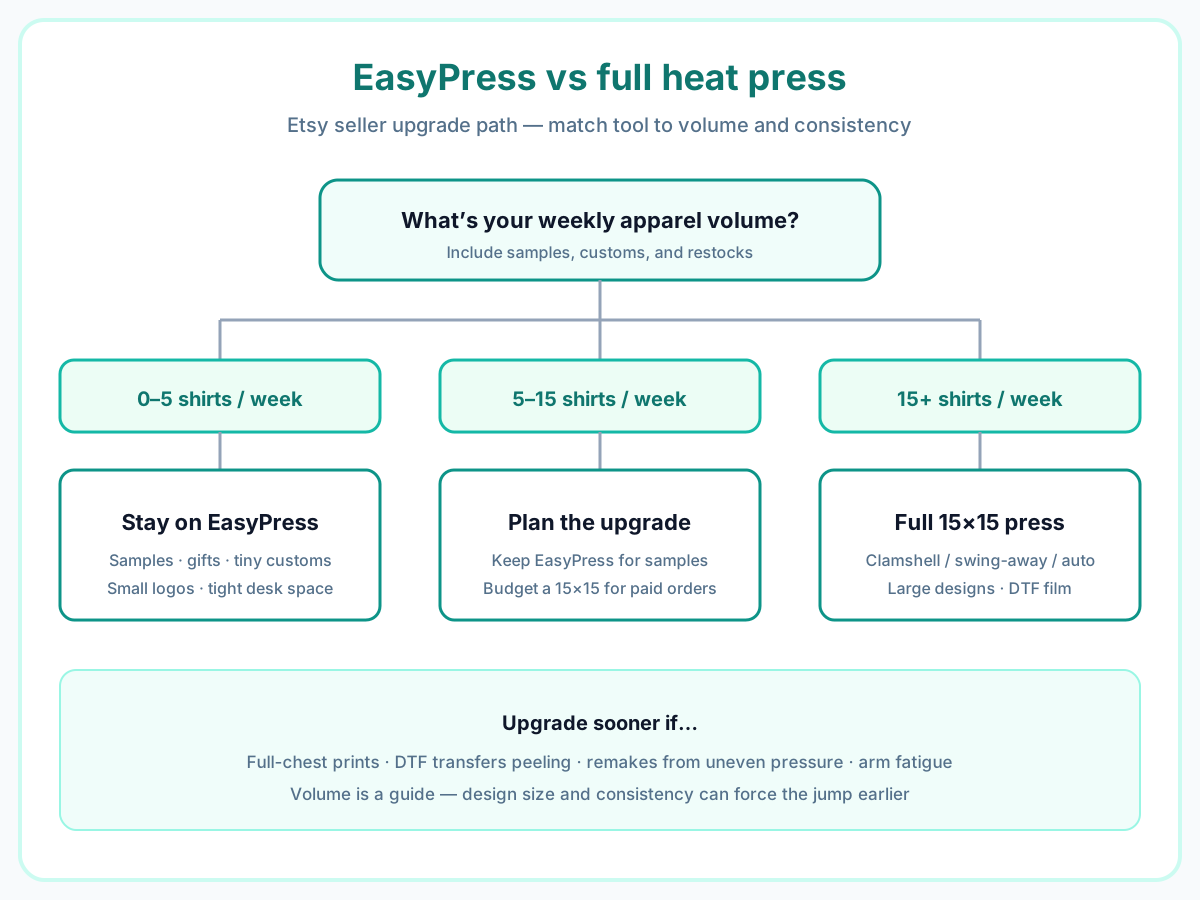
What’s driving the gear decision right now?
-
Samples / < ~5 shirts weekly / small logos
Stay on EasyPress — validate designs and listings; invest cash in blanks and photos first.
-
Growing orders / mixed sizes / some full-chest art
Plan a 15×15 — keep the handheld for samples; budget clamshell, swing-away, or auto for paid work.
-
Batches, DTF film, remakes, or wrist fatigue
Upgrade now — consistency is cheaper than apologizing. Start with a beginner 15×15, not commercial pneumatics.
Rule of thumb: If you would not trust your current handheld setup to make ten identical shirts for one customer, stop selling ten-identical-shirt orders on that setup—or upgrade the press before the next sale.
Upgrade triggers (checklist)
- You remade more than a couple of paid shirts last month due to adhesion or uneven finish
- Your bestseller’s art is wider than your heated plate
- DTF transfer invoices are rising and you are still puzzle-pressing
- Multi-item orders take disproportionately long versus single customs
- You avoid listing larger designs because pressing them feels risky
- You have a stable table and outlet plan for a 15×15 machine
Hit three or more and the upgrade conversation is overdue—not aspirational.
Common mistakes
- Treating EasyPress and a full press as interchangeable for every SKU — coverage and pressure mechanics differ
- Buying a full press on day one with no sales — sometimes the handheld is the cheaper way to learn demand
- Overlapping a small plate across a large transfer without a test protocol — shiny lines and missed edges follow
- Ignoring manufacturer peel/pressure notes and blaming the tool brand
- Skipping pre-press on damp blanks—moisture problems look like “bad equipment”
- Underpricing labor on handheld batches so the full press “never seems worth it” on paper
- Upgrading to a tiny craft press instead of 15×15 when apparel is the business—you outgrow it twice
- No wash test before scaling a new blank + vinyl/transfer combo
FAQ
Can I sell on Etsy with only an EasyPress?
Yes—many shops do—especially with small placements and low volume. The question is whether your product mix and order sizes stay inside what hand pressure and plate size can deliver consistently.
Is EasyPress “not for business”?
That slogan is too absolute. It is a weak fit for high-consistency batch apparel; it can be a strong fit for samples, tiny customs, and space-constrained starts.
Do I need both tools?
Optional but common: EasyPress for portable samples, 15×15 for shipped orders. If you must own one for an apparel-first shop, prioritize the full press once orders are real.
Will a full press fix bad settings?
No. Wrong time/temp/peel still fails. A press mainly makes correct settings repeatable.
What size EasyPress maps to apparel?
Larger plates (often marketed around 12×10 class) cover more chest logos than mini sizes, but still are not a substitute for a 15×15 platen on full-front designs. Check the exact SKU dimensions.
Clamshell, swing-away, or auto after I upgrade?
Match space and product mix—see our 15×15 beginner guide for shortlists and the design-class decision tree.
How we chose (method, not lab theater)
PressDesk framed EasyPress vs full heat press for Etsy sellers using: (1) published form factors and controls (hand plate vs clamping platens), (2) typical plate/platen sizes sold for home apparel, (3) workflow fit for samples vs batches, (4) approximate 2025–2026 street-price bands, and (5) known tradeoffs around pressure consistency, footprint, and remake risk described in public manufacturer guidance and common seller education content.
We did not invent private adhesion rankings or “tested in our studio” scores. Specs and prices move—confirm the live listing, warranty, and your material charts before you buy.
Final recommendation
- Validating designs / tiny logos / tight space: EasyPress-class handheld is enough
- Paid batches, full-chest art, or DTF film: move to a beginner 15×15 heat press
- Hybrid reality: keep the handheld for samples; ship from the full press
- Next read: pick clamshell vs swing-away vs auto in the 15×15 buyer’s guide
Upgrade when consistency—not novelty—is the bottleneck. For EasyPress vs heat press for selling, the winning choice is the one that matches your weekly volume and design size without gambling on customer reviews.
Affiliate link — Amazon · Check live prices before you buy.
Affiliate disclosure: PressDesk may earn a commission if you purchase through links on this page, at no additional cost to you.