Auto Heat Press vs Manual Clamshell for Home Apparel Shops
Auto heat press vs manual clamshell—what “auto” really means for drawer cycles and timers, how pressure consistency and footprint differ, approximate public price bands, and when an HTVRONT-style auto is worth it over a Fancierstudio or PowerPress manual.
Once you decide a full 15×15 heat press belongs in your home apparel shop, the next fork is usually auto heat press vs manual clamshell. Marketplace listings blur the words—“automatic timer,” “auto-open,” “drawer,” “smart press”—so this guide defines what “auto” actually means for beginners, then compares pressure consistency, learning curve, speed, footprint, and approximate public price bands.
This comparison is written for home apparel shops shipping custom tees and hoodies (Etsy or similar)—not commercial pneumatic floors. We use published form factors, common studio workflows, and approximate 2025–2026 street-price bands from brand and major-marketplace listings.
We did not run private adhesion labs or invent “hands-on” sales rankings. Tradeoffs below follow public specs and known operator differences between drawer/auto cycles and hand-lever clamshells. Always verify the live listing, voltage, warranty, and your material charts before you buy.
Quick comparison
| Factor | Auto / drawer-style | Manual clamshell |
|---|---|---|
| What “auto” usually means | Drawer or slide-out load + machine-driven press/release and timer cycle | You close a hinged jaw with a hand lever; timer is usually digital but pressure is dial/feel |
| Pressure consistency | Higher out of the box—the cycle repeats the same way | Depends on dial setup and how hard you pull the lever |
| Learning curve | Shorter for pressure; still learn time/temp/peel | Steeper first week on pressure dials and burn awareness |
| Speed | Fast once loaded; cycle handles hold time | Fast for flat tees once dialed; you own every close/open |
| Footprint | Often deeper (drawer travel)—measure clearance | Usually compact depth; heat stays above the lower platen |
| Approx. street price* | Often ~$250–$350+ (entry auto → Auto 2 class) | Often ~$175–$210 for popular 15×15 manuals |
| Best home-shop fit | Consistency-first, shared studios, DTF batches | Budget-first, flat apparel, tight cash |
*Approximate bands from brand and major-retailer listings commonly observed around 2025–2026. Promo kits and refurbished units move the needle—confirm before checkout.
Affiliate link — Amazon · Affiliate link — brand store
As an Amazon Associate, PressDesk may earn from qualifying purchases.
-
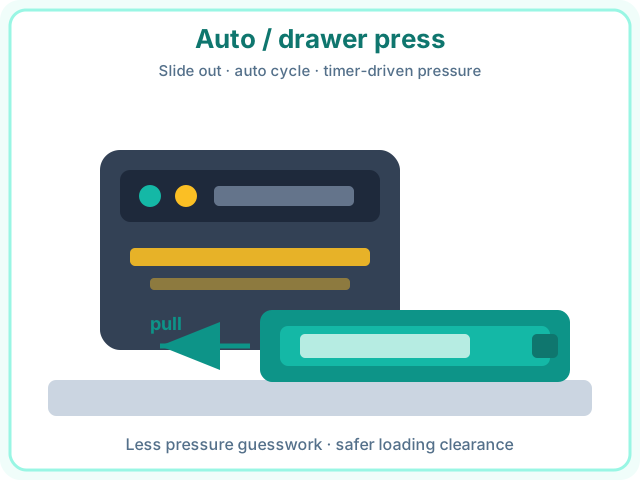
Auto / drawer
-
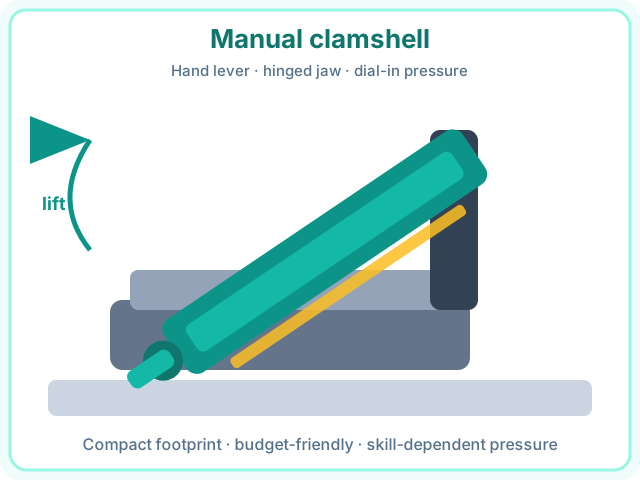
Manual clamshell
Who this guide is for
You’re in the right place if you:
- Already know you need a full 15×15—not just a handheld EasyPress—for paid apparel
- Are deciding auto heat press vs manual clamshell for a spare-room, garage, or apartment studio
- Want clear tradeoffs on pressure, burn/loading risk, footprint, and price—not unboxing hype
- Press HTV, purchased DTF transfers, or both on cotton/blend garments
Look elsewhere (for now) if you:
- Only need a handheld tool for samples (see EasyPress vs full heat press)
- Are shopping pneumatic commercial press floors
- Need mug/hat specialty attachment deep dives
What “auto” actually means (and what it doesn’t)
In home-shop marketing, “auto” rarely means a factory pneumatic. For apparel beginners it usually means one or more of:
- Drawer / slide-out loading — pull the lower platen toward you, dress the shirt, push in, then start a cycle. HTVRONT-style auto presses are the common reference class.
- Machine-driven press and release — the unit applies and releases pressure on a timer so you are not holding a lever for the full dwell.
- Digital timer / presets — time (and often temperature) live on a control panel; some models add auto-open at the end of the cycle.
- Optional pressure adjustability — entry autos may fix or limit pressure; “Auto 2”-class listings often advertise more adjustable pressure or height. Read the exact SKU.
What auto does not automatically mean: commercial duty cycles, unlimited max temperature for every specialty film, or zero need to follow material charts. Wrong time, temperature, or peel still fails on an auto press.
Manual clamshell (the baseline)
A manual clamshell opens like a jaw on a rear hinge. You align on the lower platen, pull a lever to close, and set pressure with a dial (or equivalent). Popular home-shop examples in public shortlists include Fancierstudio FS15×15-class and PowerPress Industrial PW15×15-class machines. Timers are digital on most modern units; the “manual” part is the lever and pressure feel.
Auto / drawer wins on
- Repeatable pressure cycles
- Clearer loading clearance from the hot plate
- Lower technique risk while learning
Manual clamshell wins on
- Lower typical entry price
- More compact depth on many tables
- Simple mechanics once dials are learned
Pressure consistency (where remakes hide)
Customer returns rarely say “you bought the wrong press class.” They say the print lifted at the edge, cracked early, or looked different from shirt to shirt. After time and temperature are dialed, pressure variation is a common culprit—and that is where auto heat press vs manual shows up for sellers.
- Manual: Charts call for light, medium, or firm. Your dial setting plus how hard you pull the lever decide whether shirt #1 and shirt #12 in one order match. Too light → edge lift on DTF or HTV. Too heavy → crush marks or seam issues on some garments.
- Auto / drawer: The cycle repeats the same mechanical motion. That does not replace correct settings, but it removes “did I lean harder on this one?” variation—especially useful when you are still learning while fulfilling paid orders.
Learning curve and burn / loading risk
Manual clamshell: Compact and familiar, but the hot upper platen stays above the work area while open. Beginners must slow down when dressing thick garments or fiddly transfers. Pressure-dial literacy usually takes a weekend of scrap blanks—budget those scraps into your startup cost.
Auto / drawer: Loading happens with the work surface pulled out, so hands sit farther from a hovering hot plate during dress-up. That is a real safety and confidence win in shared home studios (kids, pets, partners walking through). You still respect heat; you just get a clearer loading posture.
Neither design forgives rushing. Auto reduces technique risk on pressure and loading; it does not make transfers magic.
Speed, workflow, and footprint
Speed
Neither class is “slow” for typical home Etsy volume. The differences are workflow shape:
- Manual: Very quick once pressure is dialed—close, wait for the timer, open, peel. The bottleneck is usually weeding, packaging, or transfer prep—not the lever.
- Auto: Loading and unloading the drawer adds a motion; the machine owns the hold. Hands-free dwell helps when you stage the next shirt or check a packing slip.
For roughly under ~15–20 shirts in a session, choose on consistency and budget—not raw cycle-time marketing copy.
Footprint
- Manual clamshell: Usually the smaller depth footprint. Needs a sturdy dedicated table and overhead clearance for the open jaw.
- Auto / drawer: Plan for drawer travel in front of the machine plus cable and ventilation space. Measure the table before you buy; a dining table that “fits the box” may not fit an open drawer.
Swing-away presses are a third design class when open-platen alignment matters more than drawer automation—covered in the 15×15 beginner guide.
Approximate price bands (public listings)
These are labeled approximate bands from brand sites and major marketplaces commonly observed around 2025–2026. They are not quotes and they move with promos, kits, and refurbished stock.
| Class | Example references | Approx. street band* |
|---|---|---|
| Budget manual clamshell | Fancierstudio FS15×15 class | Often $175–$190 |
| Mid manual clamshell | PowerPress PW15×15 class | Often ~$200 |
| Entry auto / drawer | HTVRONT Auto Heat Press 15×15 class | Often $250–$300 new (refurb lower) |
| Auto + more adjustability | HTVRONT Auto Heat Press 2 class | Often ~$350+ |
*Confirm live price, warranty, listed max temperature, and whether the SKU is flat-only or a mug/hat combo kit. Combo kits inflate totals—buy flat-only if apparel is the business.
When an HTVRONT-style auto makes sense
Choose auto / drawer when several of these are true:
- You want fewer pressure mistakes while you are still learning material charts
- You share the studio with household traffic and want clearer loading clearance
- You press purchased DTF in matching multi-shirt orders
- Remakes already cost more than the typical auto-vs-manual price gap
- You will pay roughly $250–$350+ for that consistency
When a Fancierstudio / PowerPress manual clamshell makes sense
Choose manual clamshell when:
- Budget and compact depth dominate the decision
- Product mix is mostly flat tees with straightforward placements
- You are willing to practice pressure dials on scrap blanks before scaling volume
- You may later add a second press (auto or swing-away) rather than overspending on day one
Manual is not “worse”—it is more operator-dependent. Many profitable home shops run manuals for years. The failure mode is buying the cheapest listing, skipping pressure tests, then blaming the category instead of the setup.
DTF and HTV notes for this gear choice
Method choice and press class interact. For the deeper method comparison, see DTF vs HTV for cotton Etsy tees. The gear-relevant short version:
- Simple HTV (one color, small logo): Either class works; a dialed manual is often enough.
- Layered or large HTV: Weeding labor is already expensive—inconsistent pressure wastes that work. Auto helps if you struggle to match firmness shirt to shirt.
- Purchased DTF film: You paid for even coverage. A repeatable auto cycle is a strong fit; a well-dialed manual still works if you verify with wash tests.
- Hybrid shops: Some sellers keep a manual for overflow and move matching DTF batches onto auto—or the reverse, depending on which machine they trusted first.
Upgrade path
- Validating demand / tiny samples only — stay on a handheld / EasyPress path first (upgrade timing).
- First paid 15×15 — manual clamshell or entry auto based on the decision tree below.
- Steady weekly volume / thicker garments / pressure limits — Auto 2-class, swing-away, or a second specialized press—not another ultra-cheap mystery clamshell.
- True production floor — pneumatic commercial gear (out of scope for this home-shop comparison).
Decision tree
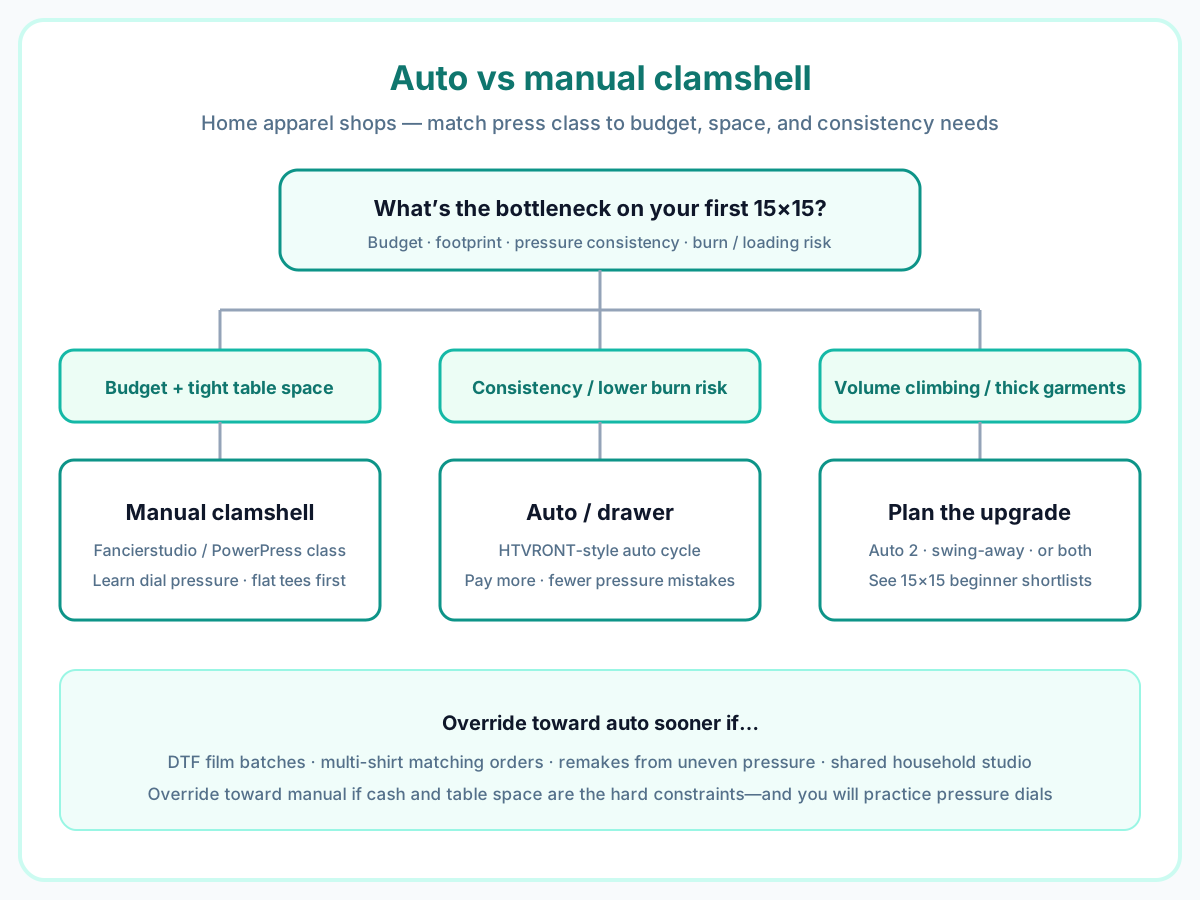
What’s the bottleneck on your first 15×15?
-
Budget + tight table depth
Manual clamshell — Fancierstudio / PowerPress class; learn dial pressure on scrap; flat tees first.
-
Consistency / lower burn & loading risk
Auto / drawer — HTVRONT-style cycle; pay more to remove pressure guesswork while you sell.
-
Volume climbing / thick garments / pressure limits
Plan the upgrade — Auto 2, swing-away, or both. Use the 15×15 shortlists.
Rule of thumb: Override toward auto sooner for DTF batches, matching multi-shirt orders, remakes from uneven pressure, or shared household studios. Override toward manual when cash and table depth are the hard constraints—and you will actually practice the dials.
Common mistakes
- Assuming “auto” means commercial pneumatic quality — home autos are a convenience/consistency class, not a factory floor
- Buying a mug/hat combo kit you will never use — paying for bulk and clutter
- Skipping pressure tests on scrap before the first paid batch
- Ignoring listed max temperature versus specialty materials on your roadmap
- Measuring the closed machine but not drawer travel or open-jaw height
- Blaming the brand when time/temp/peel charts were wrong
- Upgrading twice on purpose — ultra-cheap manual → slightly better manual → finally auto, instead of one honest decision
- No wash test on new blank + vinyl/transfer stacks before scaling
FAQ
Is an auto heat press worth it for a home shop?
Often yes if remakes, matching multi-shirt orders, or loading confidence matter more than saving roughly $50–$100 versus a solid manual. If cash is the hard constraint and you will practice dials, manual remains rational.
Can a manual clamshell do DTF?
Yes—many shops do. Success depends on even pressure and following the transfer maker’s chart, not the word “auto” on the box.
Do I need a swing-away instead of auto or manual?
If open-platen alignment and hoodie dressing are the main pain, swing-away may beat both for your mix. See the design-class tree in our 15×15 beginner guide.
Will an auto press fix bad settings?
No. It makes correct settings more repeatable. Wrong time, temperature, or peel still fails.
What about EasyPress?
Different tool class—hand pressure and smaller plates. If you have not committed to a 15×15 yet, start with EasyPress vs full heat press.
Auto vs Auto 2—what’s the difference?
Public listings and buyer guides in 2026 often frame Auto 2-class machines as the step with more pressure/height adjustability and a higher street price. Always compare the exact SKU specs rather than the marketing name alone.
How we chose (method, not lab theater)
PressDesk framed auto heat press vs manual for home apparel shops using: (1) published form factors (drawer/auto cycle vs hand-lever clamshell), (2) pressure and loading tradeoffs relevant to spare-room studios, (3) approximate 2025–2026 street-price bands from public brand/marketplace listings, (4) DTF/HTV workflow fit, and (5) upgrade paths that avoid invented “tested in our lab” rankings.
We did not invent private adhesion scores or secret sales data. Specs and prices move—confirm the live listing, warranty, and your material charts before you buy.
Final recommendation
- Tight budget + flat tees + willingness to learn dials: manual clamshell (Fancierstudio / PowerPress class)
- Consistency-first, DTF batches, shared studio: HTVRONT-style auto / drawer
- Already selling steadily with pressure or garment-thickness limits: plan Auto 2 or swing-away rather than another bare-bones manual
- Still on a handheld: settle EasyPress vs 15×15 first, then return to this fork
For auto heat press vs manual, pick the class that matches your real bottleneck—cash, space, or consistency—not the flashiest listing photo.
Affiliate link — Amazon · Check live prices before you buy.
Affiliate disclosure: PressDesk may earn a commission if you purchase through links on this page, at no additional cost to you.